14 Key Elements of Mid-Century Modern Kitchen Design
Mid-century modern design is a timeless aesthetic that celebrates clean lines, organic forms, and a seamless connection between indoors and out. This beloved style, which originated in the mid-20th century, is a perfect fit for the heart of the home. These essential mid-century modern kitchen design elements will help you create a space that is both retro-inspired and perfectly suited for contemporary living and indoor plant wall ideas.
1) Flat-Panel Cabinetry
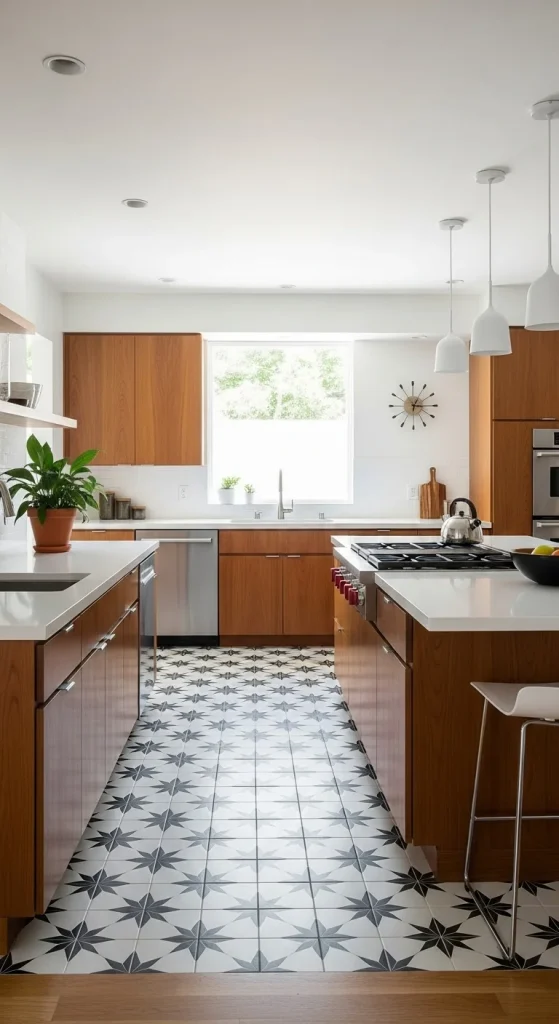
The hallmark of a mid-century kitchen is simple, unadorned cabinetry. Flat-panel or slab-style cabinet doors provide a clean, uninterrupted surface that emphasises the beauty of the material itself. This minimalist approach avoids fussy details and creates a sleek, streamlined look that is central to the aesthetic.

2) Warm Wood Tones
Wood is a fundamental material in this design style, adding warmth and an organic touch. Look for cabinets and furniture in warm, medium-toned woods like walnut, teak, or oak. The rich, natural grain of the wood provides a beautiful contrast to other materials and is a key feature of mid-century design in living room decor ideas.

3) An Earthy, Nature-Inspired Colour Palette
Mid-century colour palettes are deeply connected to nature. Start with a neutral base and introduce earthy, saturated accent colours. Think of avocado green, mustard yellow, burnt orange, or a muted teal. These colours can be used on a backsplash, as an accent wall, or in smaller doses through accessories.

4) Clean, Geometric Patterns
Geometric patterns are a staple of mid-century modern design. This can be incorporated through a bold, graphic backsplash tile, a patterned floor, or even in textiles like curtains and tea towels. Look for simple, repeating shapes like starbursts, diamonds, or clean linear patterns for an authentic touch.
5) Minimalist and Simple Hardware
To maintain the clean, streamlined look, cabinet hardware should be simple and functional. Sleek, linear metal bar pulls or understated, round knobs are classic choices. Finishes like brushed brass or polished nickel can add a touch of warmth and elegance without being overly ornate.

6) Iconic Mid-Century Lighting
Lighting in a mid-century kitchen is both functional and sculptural. Look for iconic fixtures like a globe pendant light, a sputnik-style chandelier, or an arc floor lamp. These pieces act as functional art, adding a distinctively retro yet timeless feel to the space.

7) A Seamless Connection to the Outdoors
This design philosophy emphasises a connection to nature. If your kitchen layout allows, incorporate large windows, skylights, or sliding glass doors that lead to a patio or garden. This floods the space with natural light and blurs the line between inside and out, a key tenet of mid-century architecture.

8) Organic, Curved Forms
While the overall aesthetic is clean-lined, mid-century design also celebrates soft, organic curves. This can be seen in the rounded corners of a countertop, the shape of a Tulip-style dining table, or the iconic, curved backs of Eames or Bertoia chairs. These shapes provide a beautiful contrast to the straight lines of the cabinetry.

9) Open-Concept Layout
Many mid-century homes pioneered the open-concept floor plan. An open flow between the kitchen, dining, and living areas creates a more social, airy, and light-filled environment. This is a design principle that remains incredibly popular today for its functionality and modern appeal.

10) A Focus on Functionality
Mid-century modern design is rooted in the idea that form should follow function. Every element in the kitchen should be practical and well-designed. This means prioritising a smart, efficient layout, ample storage, and durable, high-quality materials that are meant to be used and enjoyed.

11) Durable, Low-Maintenance Flooring
Flooring in a mid-century kitchen should be simple and durable. Classic choices include natural materials like cork or slate tile. For a modern interpretation, marmoleum or large-format tiles in a neutral colour can provide a clean, seamless look that is easy to maintain and complements the aesthetic perfectly.

12) A Statement Backsplash
The backsplash is a perfect place to add a pop of colour or a classic geometric pattern. Vertically stacked subway tiles (a departure from the traditional running bond pattern) can create a modern, linear look. A colourful, glazed tile in a shade of green or blue is also a classic way to add a touch of authentic mid-century style.

13) Simple, High-Quality Countertops
Countertops in a mid-century modern kitchen are typically simple and understated. A durable, light-colored quartz or a classic laminate in a retro pattern are both excellent choices. The focus is on a clean, functional surface that doesn’t compete with the other design elements in the room.

14) Tapered Furniture Legs
One of the most recognisable details of mid-century design is the tapered leg. Incorporate this feature through your dining table, chairs, or bar stools. This elegant, angled leg design gives furniture a sense of lightness and grace, making pieces appear to float above the floor.

Creating a mid-century modern kitchen design is about balancing clean, minimalist lines with warm, organic materials and a touch of retro charm. By focusing on these key elements, you can design a space that is not only a beautiful nod to the past but also a highly functional and timeless kitchen for today.