13 Essential Kitchen Lighting Tips for a Bright & Beautiful Space
Good lighting is one of the most critical elements of a well-designed kitchen. It’s not just about being able to see what you’re doing; the right light can transform the room’s entire mood, making it feel more spacious, inviting, indoor plant wall ideas and stylish. These essential kitchen lighting tips will guide you through the process of layering light for a space that is both perfectly functional and beautifully illuminated.
1) Layer Your Lighting
The key to a well-lit kitchen is using three distinct layers of light. Ambient Light: The main, overall illumination for the room, usually from a central ceiling fixture or recessed cans. Task Light: Focused light for specific work areas, like countertops, living room decor ideas, the sink, and the stove. Accent Light: Softer light used to highlight decorative features, like artwork or the inside of a glass cabinet.

2) Install Under-Cabinet Lighting
This is the most important type of task lighting in a kitchen. Under-cabinet lights illuminate your countertops directly, eliminating shadows cast by your body and the upper cabinets. This makes food prep safer and easier. Modern, low-profile LED strips are easy to install and provide bright, even light.

3) Hang Statement Pendants Over the Island
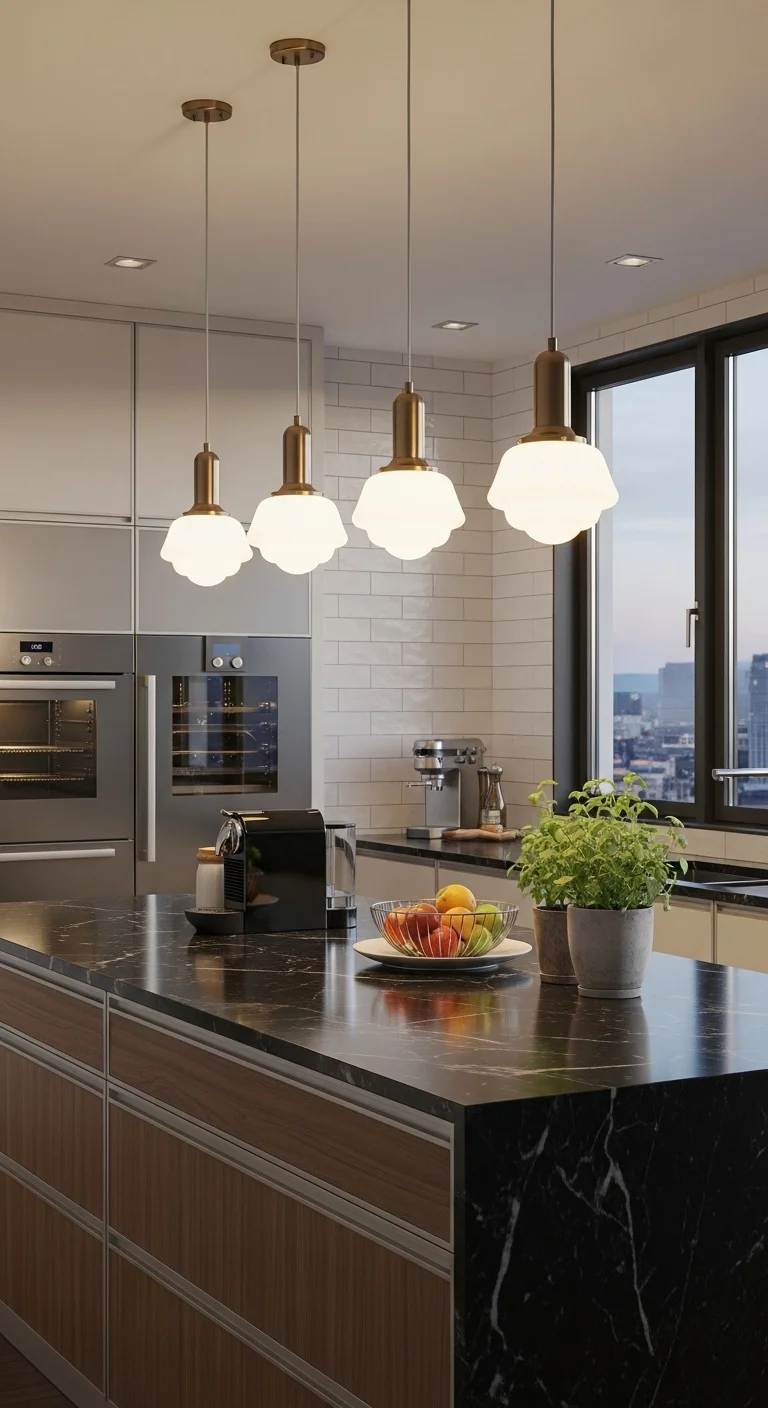
The kitchen island is a natural focal point, and pendant lights are the perfect way to highlight it. A row of two or three beautiful pendants adds a major dose of style and provides excellent task lighting for the island surface. Choose a style that complements your kitchen’s overall aesthetic, from modern globes to rustic industrial fixtures.

4) Use Dimmers on Every Light
Installing dimmer switches on all your kitchen lights is a game-changer. This gives you complete control over the room’s ambiance. You can have bright, full light for cooking and cleaning, and then dim the lights for a soft, warm glow during dinner or for a relaxing evening atmosphere.

5) Choose the Right Colour Temperature
The colour of your light bulb has a huge impact on the feel of your kitchen. For task areas where you need to see clearly, a neutral or cool white bulb (around 3000K-4000K) is a good choice. For ambient lighting or dining areas, a soft white or warm white bulb (around 2700K) will create a cosier, more inviting glow.

6) Don’t Forget the Sink Area
The sink is a major work zone that is often poorly lit. If you have a window over your sink, a single stylish pendant or a flush-mount fixture can provide needed light in the evenings. If your sink is under cabinets, ensure your under-cabinet lighting extends to that area.

7) Illuminate the Inside of Cabinets
For a high-end, functional touch, add lighting inside your cabinets. This can be particularly useful in a deep pantry cabinet, making it easy to see what’s in the back. For upper cabinets with glass fronts, interior lighting turns them into a beautiful display case for your favourite dishes or glassware.

8) Use Recessed Cans for Overall Ambient Light
A grid of recessed can lights is a popular and effective way to provide even, overall ambient light for the entire kitchen. A good rule of thumb is to space them so that the light beams overlap, preventing dark spots. When put on a dimmer, they provide a flexible foundation for your lighting scheme.

9) Highlight Features with Accent Lighting
Use accent lighting to draw attention to your kitchen’s beautiful features. A small, adjustable spotlight can be aimed at a piece of art or an open shelving display. LED tape lighting can be installed above your cabinets (uplighting) to create a soft, ambient glow that makes the ceiling feel higher.

10) Choose a Stylish Dining Area Fixture
If you have an eat-in kitchen or a breakfast nook, the light fixture over the table helps to define that zone. A small chandelier or a beautiful pendant light hung lower over the table creates a more intimate dining atmosphere. Make sure it’s on a separate switch from the main kitchen lights.

11) Select Easy-to-Clean Fixtures
Kitchens can get greasy and dusty, so choose light fixtures that are easy to clean. Fixtures with simple, smooth glass or metal shades are much easier to wipe down than those with intricate details or fabric shades that can trap dust and grease over time.

12) Consider Toe-Kick Lighting
For a modern, high-end look and a practical safety feature, consider installing LED strip lighting under your base cabinets in the toe-kick area. This creates a soft, low-level glow that acts as a perfect nightlight, guiding your way for a midnight snack without the need to turn on harsh overhead lights.

13) Maximise Natural Light
While not a fixture, maximising natural light is the best kitchen lighting tip of all. Keep window treatments simple and light-filtering to let in as much daylight as possible. A bright, sun-drenched kitchen will always feel more cheerful and spacious.

By thoughtfully combining these different kitchen lighting tips, you can create a space that is not only perfectly illuminated for every task but also has a warm, welcoming, and stylish ambience. A great lighting plan is a true investment in the heart of your home.